The second life of cult indie pop band Heavenly began in Amelia Fletcher and Rob Pursey’s kitchen, when their youngest daughter came in angrily demanding to know why her parents were on her timeline. Fletcher and Pursey had no idea what she was talking about.
“She was looking at TikTok, and our song kept on coming up—’P.U.N.K. Girl’—and she thought we’d somehow planted it. We had no idea. We didn’t even know what TikTok was,” says Pursey. “Soon she discovered that it was turning up on her friends’ phones as well, and it wasn’t anything we’d done.”
Unbeknownst to the members of Heavenly, “P.U.N.K. Girl,” from their 1994 album The Decline and Fall of Heavenly, had become a hit on social media; teenagers were posting videos of themselves with clips of the song playing in the background, delighting the group with their different interpretations of the 30-year-old tune. It’s a trend that has shown no signs of abating. “The latest song that has gone a bit crazy is ‘Me and My Madness’ off the third album,” says Fletcher. “It’s doing almost as well ‘P.U.N.K. Girl.’ I don’t know how these kids found it, but it’s this big hit. Completely mysterious.”
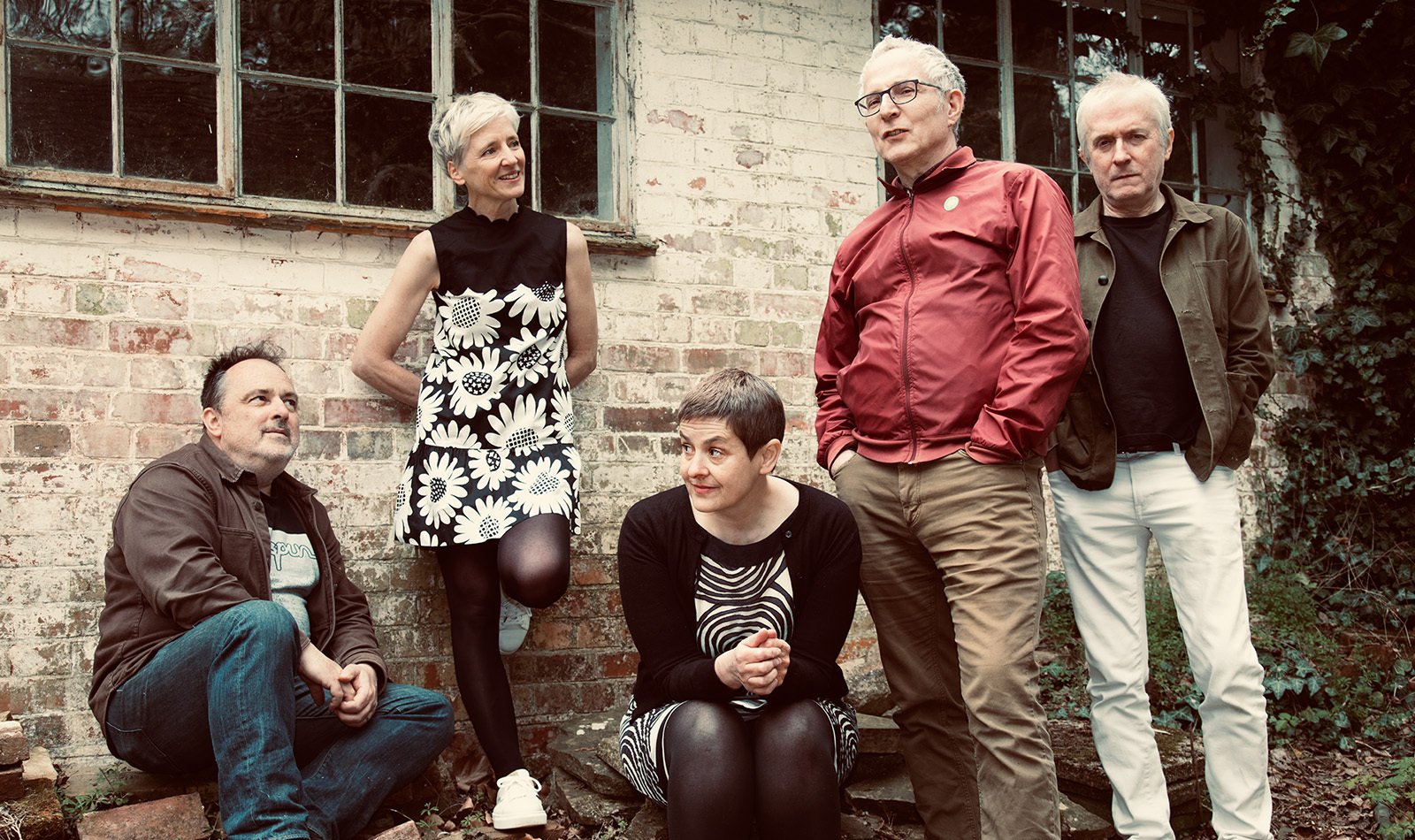
Heavenly—Fletcher on guitar and vocals; Pursey on bass; keyboardist Cathy Rogers; guitarist Peter Momtchiloff; and Mathew Fletcher (Amelia’s brother) on drums—formed four decades ago out of the ashes of beloved C86 band Talulah Gosh; they’d go on to make three records and a handful of EPs for similarly beloved label Sarah Records and one for British indie label Wiiija, coming to an unexpectedly tragic end in 1996 after Matthew took his own life shortly before the release of Operation Heavenly.
In the decades since, the members of Heavenly have pursued other projects and careers both musical and otherwise, but reviving the band wasn’t on the cards until they became aware of their renewed popularity with a younger generation. “It was the combination of discovering that people were interested in it and also that we were interested in it,” says Fletcher. “Both of those things made us think, well, let’s just put the records out and see what happens, let’s do a gig and see what happens. And all of those experiences were just really nice, so now we’re a band again!”
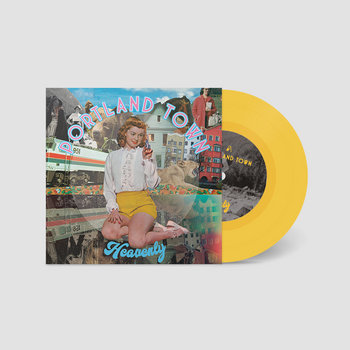
But Heavenly is very much not a nostalgia act—it was under strict orders from Pursey that the reformed band work on new material rather than simply play old songs live. Thus, anyone who has seen the group live recently might have heard a new Heavenly song, “Portland Town,” which was properly released as a single in July. A full-length of all new material is also in the works—Ian Button, who plays with Fletcher and Pursey in Swansea Sound, has joined the band on drums. Additionally, all of Heavenly’s original albums have been reissued on vinyl by Skep Wax, the indie label run by Pursey and Fletcher out of their home in Kent, which has also been releasing a steady stream of records by young indie pop bands like Lightheaded, Jeanines, and The Cords. In many ways, Heavenly aren’t just an inspiration for modern bands in underground music, they’re also still very much an active part of it.
“On one level, it would have been more sensible to go, ‘Okay, we’ve, we’ve done bands now we can, we can be the elders of the indie scene and preside over a label,” says Pursey. “But in fact, no, we still behave like teenagers with the band and we try to run a label. I don’t know if that’s a healthy combination or not, but that’s the way it is.”
Below, the members of Heavenly talk about their reformation, the process of reissuing their old records and playing live, their take on the underground scene of today, and the over/under on playing music during the day.

7" Vinyl

Had you always planned on reissuing your records or did the rights just revert back to you? Was there a reason you decided to release it yourself?
Rob Pursey: There’d been a compilation LP of the singles, which was released by Damaged Goods, who were friends of ours, and it was a much bigger hit than anybody expected. During lockdown was when we thought it’d be a good idea to start a label. That was initially to do new things—there was a new Catenary Wires LP, and there was the first Swansea Sound LP. Then the Heavenly thing seemed like a logical thing to do, and it wasn’t difficult, because we’re still friends with Matt [Haynes] and Claire [Wadd], who ran Sarah. It was pretty straightforward to say to them, ‘Look, we want to do this.’ And they’re like, ‘You’re crazy. Go ahead.’
Amelia Fletcher: Theoretically, [Sarah] still have the rights, but they were perfectly happy for us to do it. They’re quite determined that they don’t want to re-release anything. They always wanted to stop when they got to 100 releases, and they said that quite early on. Then they got Sarah to 100 and they stopped like they said they would. Unfortunately for Heavenly, we wanted to do another album, so we had to find a different label. We signed to a label called Wiiija, which is now part of the Beggars Group. I cleverly signed a contract that basically gave us our rights back after three years if we wanted them with three months notice. I probably forgot about this. When we finally thought, we’ve rereleased the other three, we should re-release [Operation Heavenly], I went and had a look. I was like, ‘Hey, I signed a good contract!’
In addition to reissuing your old records, you’ve now played a lot of shows as Heavenly and are writing/releasing new material. Was it your intention to become an active band again?
Amelia: I think the intention initially was just to do one gig, but of course, to do one gig, you have to do quite a lot of other things. You have to meet up lots of times and you have to remember all of the songs. We had to listen to them all again. Doing all the re-releases, we’d been looking back at old stuff and old photos and old flyers from shows and all of that. So even though it was just one gig, there was a lot of emotional stock in it by then. It was definitely a possibility we would have just played that one show and thought it was really fun and then not done anymore. But we’re all old and it’s just good to do fun things.
Rob: It is good to do fun things. The only thing for me, particularly, maybe Pete as well, is that we were not particularly keen on doing lots of gigs just playing the old songs the way that, obviously, lots of bands do—and that’s fine. But my attention span is very poor. I personally get very bored quite quickly of just playing the old songs. That’s why there are some new songs, because if there weren’t any, I wasn’t going to do it anymore. The new songs are to entertain ourselves more than to entertain the audience. It’s a commercial masterstroke!
Amelia: If you’re just a band doing your old songs and nothing else, you’re almost like one of those cover bands—but of yourself. That would have felt pretty weird pretty quickly. But people shouldn’t fear when we play, we’re not gonna play the songs that you like. I’ve got a friend whose daughter’s favorite bands are Tyler the Creator and Heavenly. She went to see Tyler the Creator recently and he didn’t play her favorite song. So she said, ‘Now the only band I trust is Heavenly,’ but she hasn’t told us which her favorite song is. We really need to find out.
Rob: The interesting thing with this last LP, Operation Heavenly… in the lead up to that coming out was when Mathew died. So the whole process of playing the songs live—there was a tour that was going to happen that had to be canceled, and everything had to be put in this box because we couldn’t face it. A lot of the songs on the record will be some that I think we never played live so they feel especially fresh, in a way, because they weren’t really given the airing that they would have had. I feel more excited about playing the songs off [Operation Heavenly] than any of the others because they are like new songs, really.
