
If you’re not adding meta descriptions to your website, you’re missing out on a big chance to attract and convert new visitors. It may not seem like a big deal, but a targeted snippet that appears in search engine results can make a huge difference. Without one, you could be losing clicks.
Meta descriptions are the short snippets that appear on search results pages like Google and Bing. You can customize them to better describe each page, drawing in new users and making your search results stand out from competing websites.
Adding a meta description can be as easy as filling out a box or inserting a line of code.
Ready to get more clicks? We’ll show you how to add a meta description in WordPress with and without a plugin.
Prefer to watch the video version?
What is a Meta Description?
Search engines like Google use a robot called a web crawler to index your site. The info this gives them allows them to display it properly in search results, so you can be found when people search for relevant keywords.
But since this program is just, well, a program, it doesn’t automatically know what your site is about. You have to tell it using different elements such as sitemaps, schema markup, and meta tags, just to name a few. That’s why a meta description is so important.

Users see a page’s meta description below the title in the search results. The meta description is meant to inform them about the content and purpose of a webpage so they can decide whether to click on it or not. In this example, you can also see sitelinks:
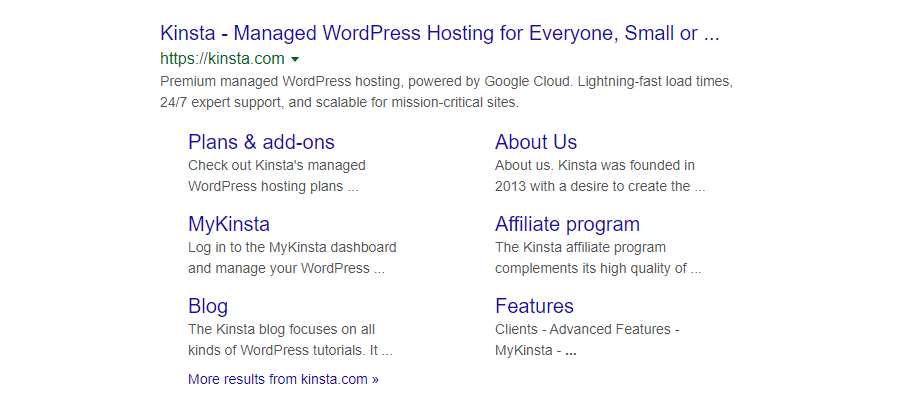
Google’s crawlers are better than they once were. In fact, they can now extract a title and meta description automatically, and figure out a page’s topic without you having to manually define keywords.
If you don’t write your own meta description, Google will generate one for you by pulling content from the page. But you could be missing out on a chance to convince people to click on the link with a targeted snippet customized to earn conversions.
How Meta Descriptions Impact Your SEO
Meta descriptions actually don’t have a direct effect on your SEO ranking, yet Google still advises to create unique ones for each page of your site. It’s the keywords found naturally in your content that are important for SEO.
What meta descriptions do impact is click-through rate (CTR), or how many people decide to click on your site.
Think about the last time you Googled something. What made you pick a certain link? It was probably the title, the description, or both that convinced you.
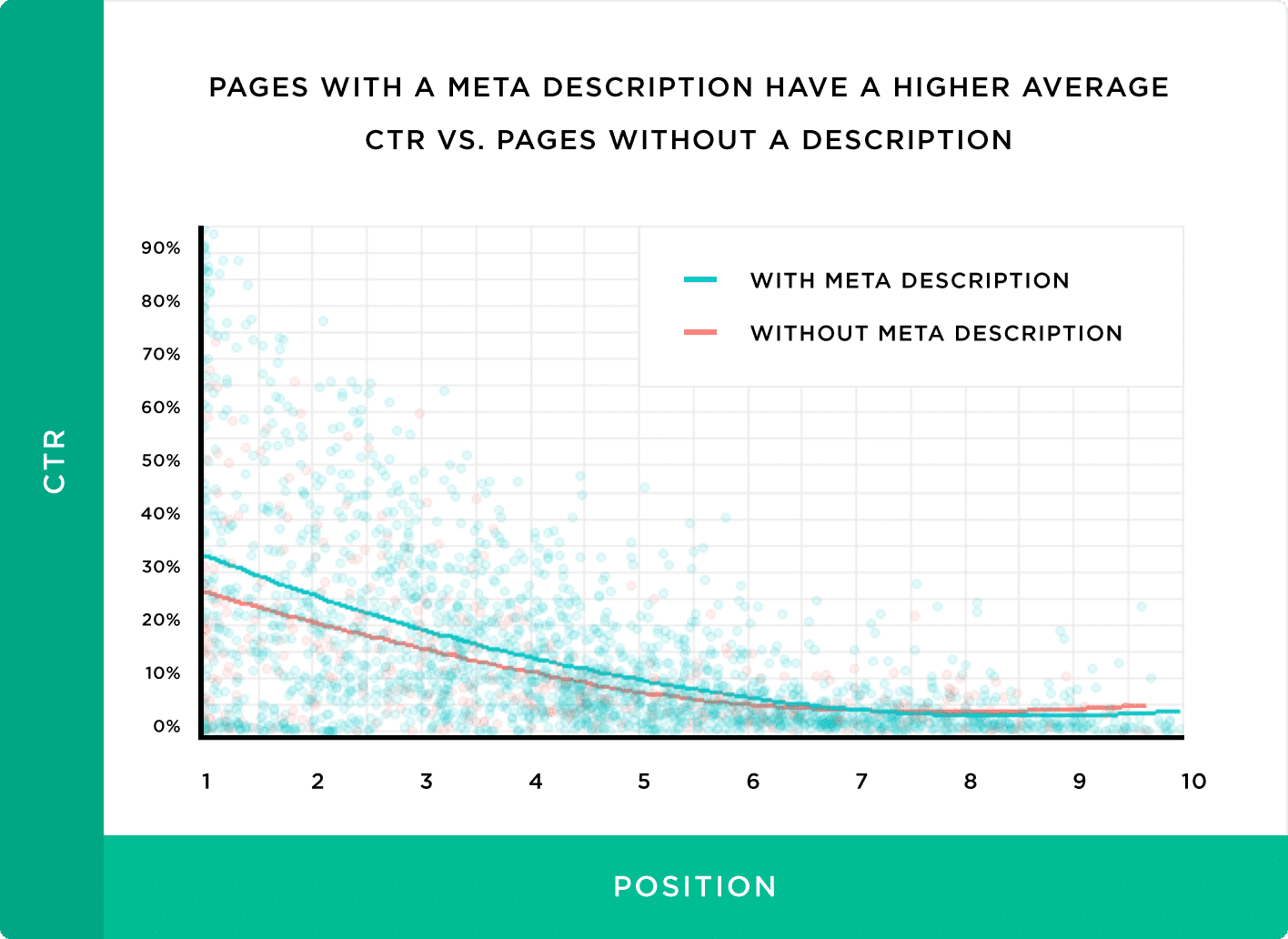
According to Backlinko, unique meta descriptions have a major impact on CTR:
“Writing unique meta descriptions for each page can increase your site’s organic CTR. We found that pages with a meta description had a 5.8% higher CTR compared to pages without a description.”
Search engines may automatically generate a snippet, but if that description doesn’t do a good job conveying what your content is about, people will ignore it and choose another website.
Writing your own meta descriptions ensures that you have more control over what people see.
I said “more control”, not “total control.” Google won’t always use your meta description, though.
Sometimes it will show parts of a page’s content that’s more relevant to a user’s search. But in most cases, it prefers to fall back to the snippet you provided rather than using an auto-generated one.
A well-written meta description plays a big part in attracting and converting visitors. It may not directly affect SEO, but it will gain you more interested visitors, and higher CTR does give your rankings a boost.
Meta Description vs Meta Keyword
Metadata as a whole is a set of HTML tags that tell search engines and web crawlers what your site is about. These include the title, description, and keywords.
You already know that a meta description is the HTML element that describes a webpage’s content and purpose.
Meta keywords are a relic of an older internet. In other words, they’ve been deprecated and are no longer in use. In the past, they were used to tell search engines what topics a page covered, similar to how you tag a social media or blog post.
However, once people realized that you could put any unrelated keyword in and get free traffic from topics your site had nothing to do with (hello “free porn” and “free mp3”), search engines removed support for the feature. You can still add meta keywords, but for the most popular search engines, it won’t do anything.
Now, Google examines a website’s content using more sophisticated web crawlers that can automatically figure out what topics are related to the content you write about on a page. It completely ignores the meta keywords attribute.
Instead of using meta keywords, improving SEO is now about optimizing natural keyword usage within your content and address other technical aspects like the speed of your site