
What do Slack, Zoom, and HubSpot all have in common? They’re all software, right?
Yes, but that’s not all. These three companies are pioneers in the product-led growth era of software growth marketing.
These companies can scale quicker and more effectively by leveraging the value and customer experience ingrained in their products to create a wave of demand worldwide.
In the past, we thought of these companies as going “viral.” But, the question is, why did they have exponential growth? How did they flip the switch on virality and generate massive consumer interest?
The answer is product-led growth, or PLG — a new era of software growth.
In this article, you’ll learn everything you need to know about product-led growth, including what it is, why it’s important, and how it works. Plus, you’ll see a few examples of companies that have successfully scaled using a product-led growth strategy.
What Is Product-Led Growth (PLG)?
Product-led growth (PLG) is a software business strategy where revenue is spearheaded by the product itself. PLG principles allow a business to drive customer acquisition, expansion, and retention by aligning different departments.
This growth model is built by bringing different teams together — from product development to sales to marketing to customer support — and connecting them closely to the product to create scalable and sustainable business growth.
Product-led growth is a relatively new concept. It’s only a few years old. But, the principles of PLG are centered around a common goal: to create a product-first, user-first experience growth engine around a SaaS product rather than a sales or marketing-first approach.
A Brief History of Product-Led Growth
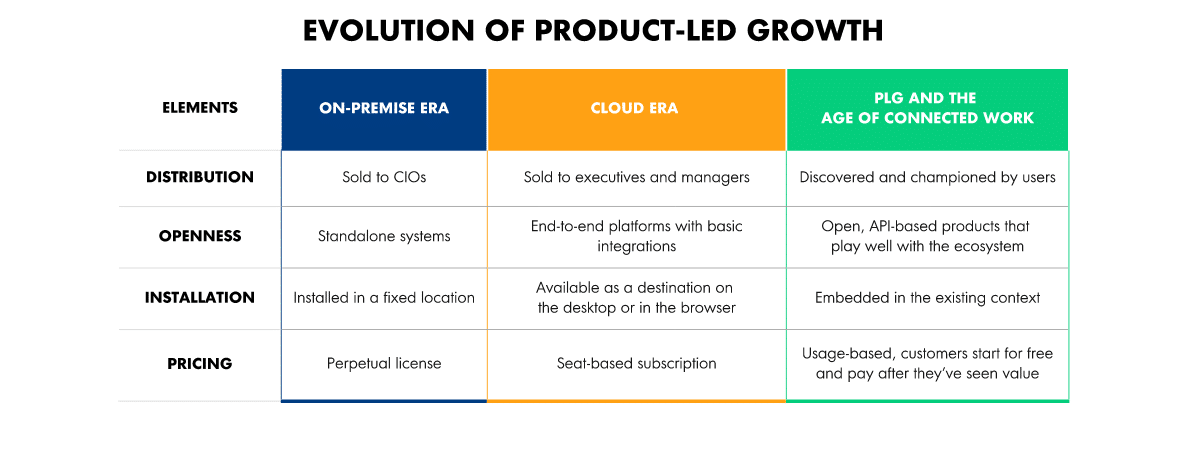
1. On-Premise Software (1980s/1990s)
Flashback to the 1980s. What was software like back then? Well, it wasn’t available to everyone since the internet was still in the early stages of development. Instead, software was something that you had to install from a physical box.
Mammoth-like machines had to be built on-site for hundreds of thousands — and sometimes even millions — of dollars.
To sell these six and seven-figure machines, businesses would depend on sales-led growth. Field sales reps would hard-sell buyers after spending plenty of time schmoozing with them at dinners and golf courses.
The main thing buyers had to worry about was whether the software was compatible with their current IT infrastructure.
2. Cloud Software (2000s/2010s)
At the turn of the century, we started flying high up into the cloud. Salesforce was one company that pioneered software outside of data centers and into the cloud. On-site software transformed into on-demand software. Development costs shriveled up and software became much more accessible to the rest of the world.
Software was finally able to be quite compatible with nearly any business setup. So, outbound sales teams didn’t need to meet with super techy executives anymore. They could reach out to execs and talk about KPIs and ROI to see how certain software would help them reach their goals.
Marketing-led growth drove this era. New terms emerged like sales development representatives (SDR) and marketing qualified leads (MQL). Inbound marketing transformed the way customers found companies to fuel demos and inside sales.
3. PLG Software (2020s)
In the early 2020s, product-led growth began taking over. Now, users have begun embracing workflows that are fully integrated and fueled by automation.
The interconnectedness of different software, combined with the rise of APIs, AI, and automation, has led to this new era called “product-led growth,” which was coined by OpenView’s Blake Bartlett in 2016.
Product-led growth was born out of the power of user experience. With software so accessible nowadays, the need for marketing and sales-led growth began to slow, while the need for the product’s performance accelerated.
Examples of PLG Companies
To help you understand more of how PLG companies succeed, take a look at some of the most popular product-led companies in the world:
Slack
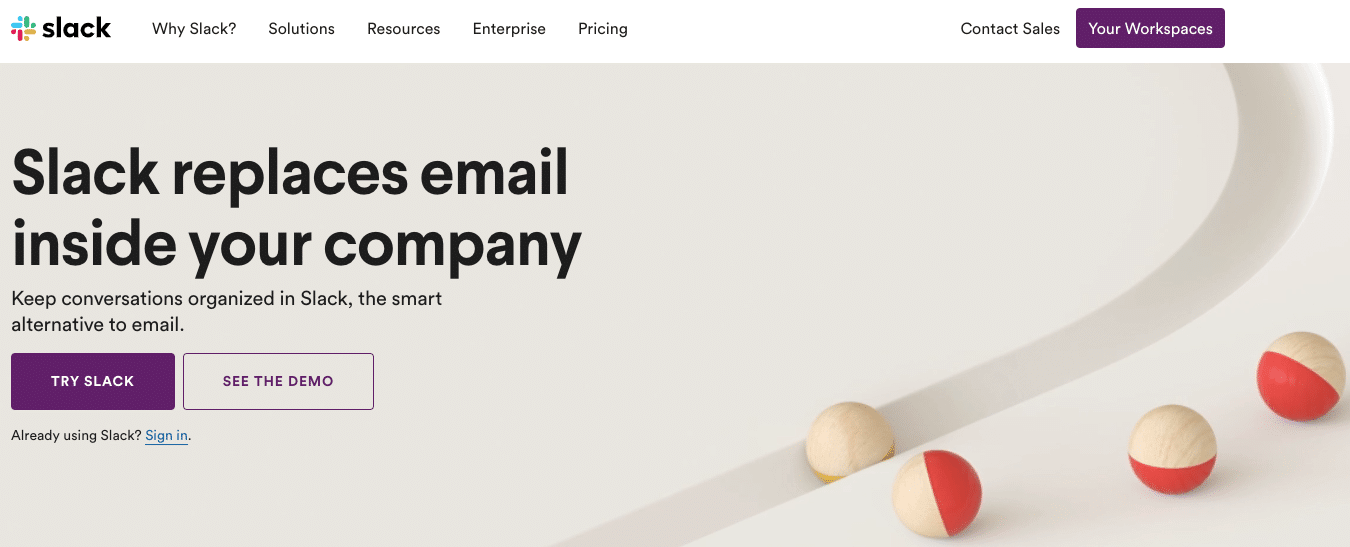
Slack is one of the prime examples of what it means to be product-led. By taking advantage of the network effect, Slack could accelerate its growth.
The company tapped into a type of virality once early adopters began convincing co-workers to hop aboard. Slack began upselling to a paid subscription by convincing users to store their complete messaging history, which was crucial for large companies.
Dropbox
Dropbox is another great example of what it means to tap into growth through the product itself. Dropbox makes it super easy for users to share folders and links with their friends and co-workers, even if their colleague doesn’t have a Dropbox account.
This meant every time a Dropbox user shared a folder, the opener would become a user of the product without even signing up. But plenty of these users signed up after seeing the value of the platform.
Dropbox’s referral program allows users to gain additional storage space for every referred user. This also encourages new people to sign up to try, fueling their PLG strategy further.
Notion
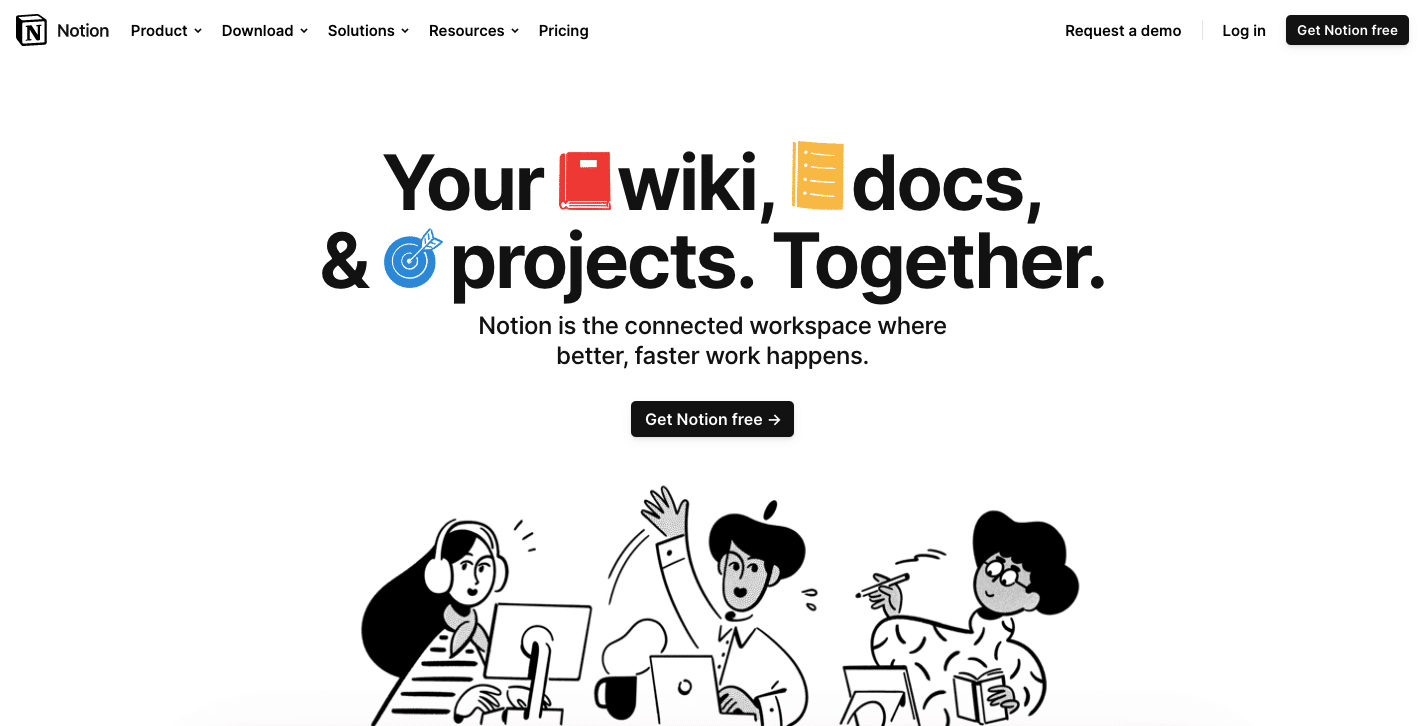
One of the keys to leveraging PLG is by making it easy for people to use the product. Notion makes it super easy for new users to start by offering free templates on their platform. They also offer webinars and tutorials to educate users on Notion’s different tools.
HubSpot
HubSpot is another product-led company that strategized by offering a sales team and customer success team for freemium users. This additional support early on enhanced the user experience, allowing plenty of product education early on which fueled signups.
By leaning on segmentation tactics, the team could invest its resources (primarily their teams) into qualified leads. By investing plenty of their money into support and resources, they could enhance their product to fuel growth.
How Does PLG Compare to Other Growth Models?
Product-led growth is the new era of growth for SaaS and software companies. However, many companies are still using other growth models, such as sales-led growth and marketing-led growth. Here’s how the different growth models compare.
Sales-Led Growth
Sales-led growth is pretty straightforward. It’s companies whose primary growth efforts are driven by their sales teams. Everything the company does supports its sales department. Major and minor decisions in every department filter actions through one question, “Does this help our sales department convert more buyers?”
But guess what? 53% of buyers prefer to make a purchase without any interaction with sales teams!
Marketing-Led Growth
Another common growth methodology is called marketing-led growth. Companies who employ this strategy focus on supporting their marketing team in every decision to help convert more leads into customers.
While sales teams still have their roles in closing deals, the marketing team is primarily driving growth through different advertising strategies and customer research.
In industries where products and software are similar, it’s often the marketing teams who make the difference in what company will drive more revenue.
Product-Led Growth
In both of the previous models, the prospective buyer has to be sold on the value of the product they’re thinking of purchasing. Alternatively, product-led growth is all about prioritizing the product to let its value speak for itself.
Rather than investing heavily in marketing teams or sales teams, product-led companies invest primarily in product development. This doesn’t mean the sales or marketing teams aren’t active.
Their primary goal is to convince prospects to try the product immediately through the freemium subscription model. By getting prospects into the door to become users, the product is designed to allow users to experience the value firsthand to reveal its true value and persuade them to continue using it, with many choosing to upgrade to a paid plan.
What Is the Importance of PLG?
Product-led growth is a necessity for any software company in the modern age. Companies don’t hold the keys anymore. Instead, they’re in the hands of the consumer. Hard-selling customers and deploying marketing tactics to fuel growth isn’t enough to convince a person in the digital age to become a customer.
The power is finally in the hands of the end user, which means the best product will win.
Here are a few reasons why PLG is a crucial strategy for SaaS and software companies to use today:
1. Improved Customer Experience
When you implement PLG, it means honing your product to make it superior in the marketplace. A major part of the process is focusing on customer experience. This means designing the product with the end user in mind.