
Starting an ecommerce business is an exciting, chaotic time. You have so many things to consider: should you use a hosted platform or manage your store with a plugin? What are the strategies you need to skyrocket your sales?
But no question is more daunting than this one: How should you accept payments?
After you do your homework, there will be two pretty clear contenders for your merchant buck: Stripe and PayPal. Offering comparable features, choosing between the two feels like picking between apples… and yet more apples. Which is where this article comes in.
Today, we’re going to compare and contrast these two payment gateways and get down to the bottom of the Stripe vs. PayPal debate.

What Do Stripe and PayPal Do?
Both Stripe (founded 2011) and PayPal (founded 1998) are payment gateways, acting as the go-between for merchants and the appropriate credit card networks/financial institutions to authorize and accept payments.
The intricacies of these relationships can get pretty convoluted. A simple way to look at a payment gateway is as an envoy that routes information between merchants and banks.
Here’s a visual breakdown of where payment gateways fall into the web of ecommerce.
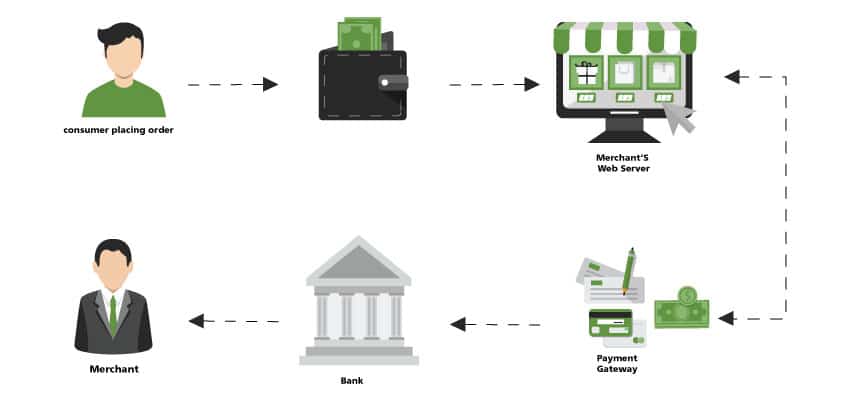
A payment gateway isn’t the only solution for accepting online payments, but it is one of the easier options to get started with.
Because unlike a payment processor, gateways give your financial data the armed guard it needs to travel between the credit card networks, your customer, and your store.
In other words, in most scenarios, it can help take the PCI compliance off your hands. And if you decide to go the gateway route, you’re going to come across Stripe and PayPal again and again. There are plenty of other payment gateways out there such as Authorize.Net, 2Checkout, Braintree (owned by PayPal), but Stripe and PayPal are by far two of the easiest ones to use.
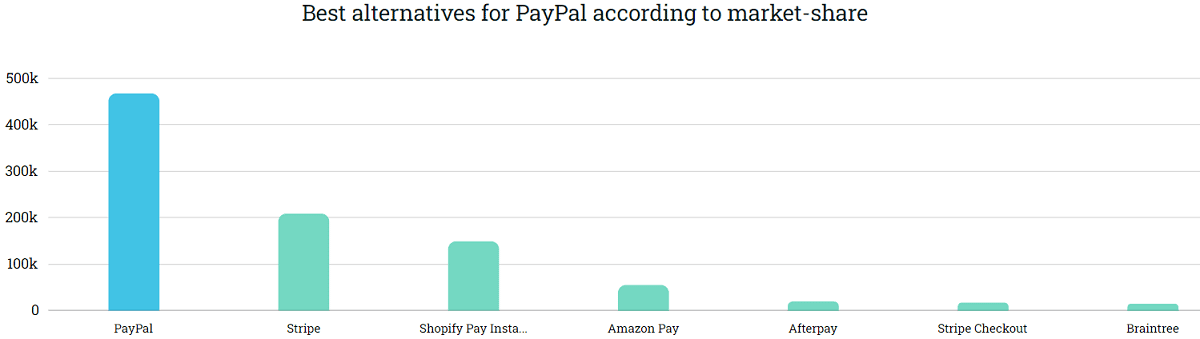
For good reason, too: they have a longstanding stranglehold on the market. According to data from Datanyze, PayPal is used by 42% of the market. Stripe comes in second with around 19%. As of September 2018, Stripe is now valued at $20 billion! 😮 In 2020, Stripe revenue grew by 270% when compared to 2019, reaching $7.4 billion.
What Are Payment Gateways Used For?
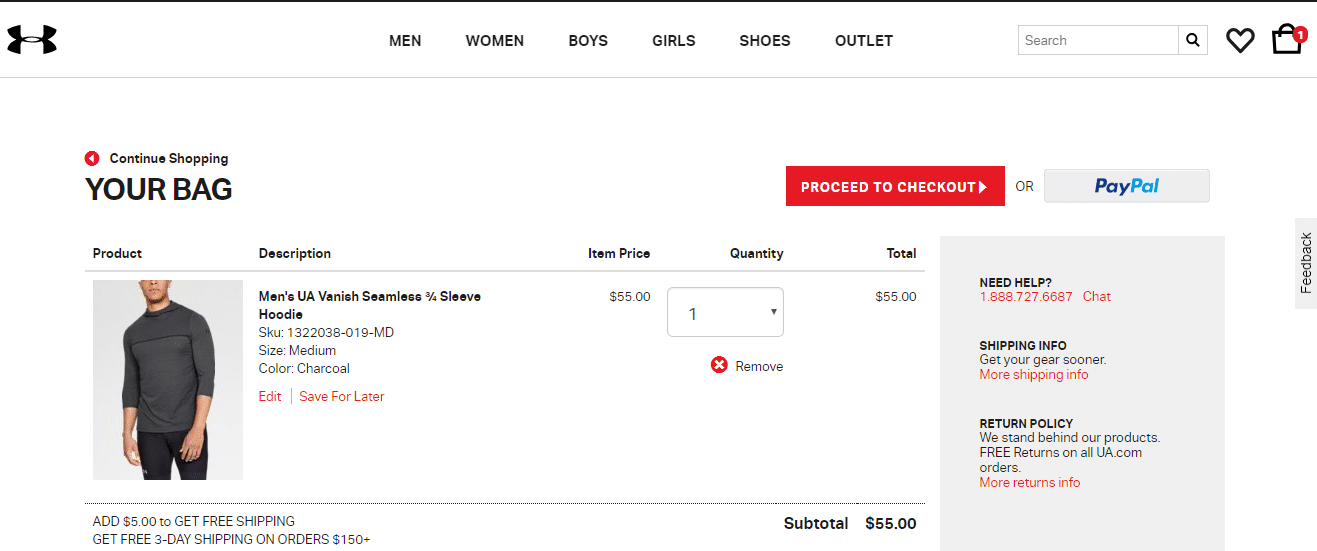
First and most obviously, ecommerce stores use payment gateways. Under Armour is an example of a store that utilizes both Stripe and PayPal.
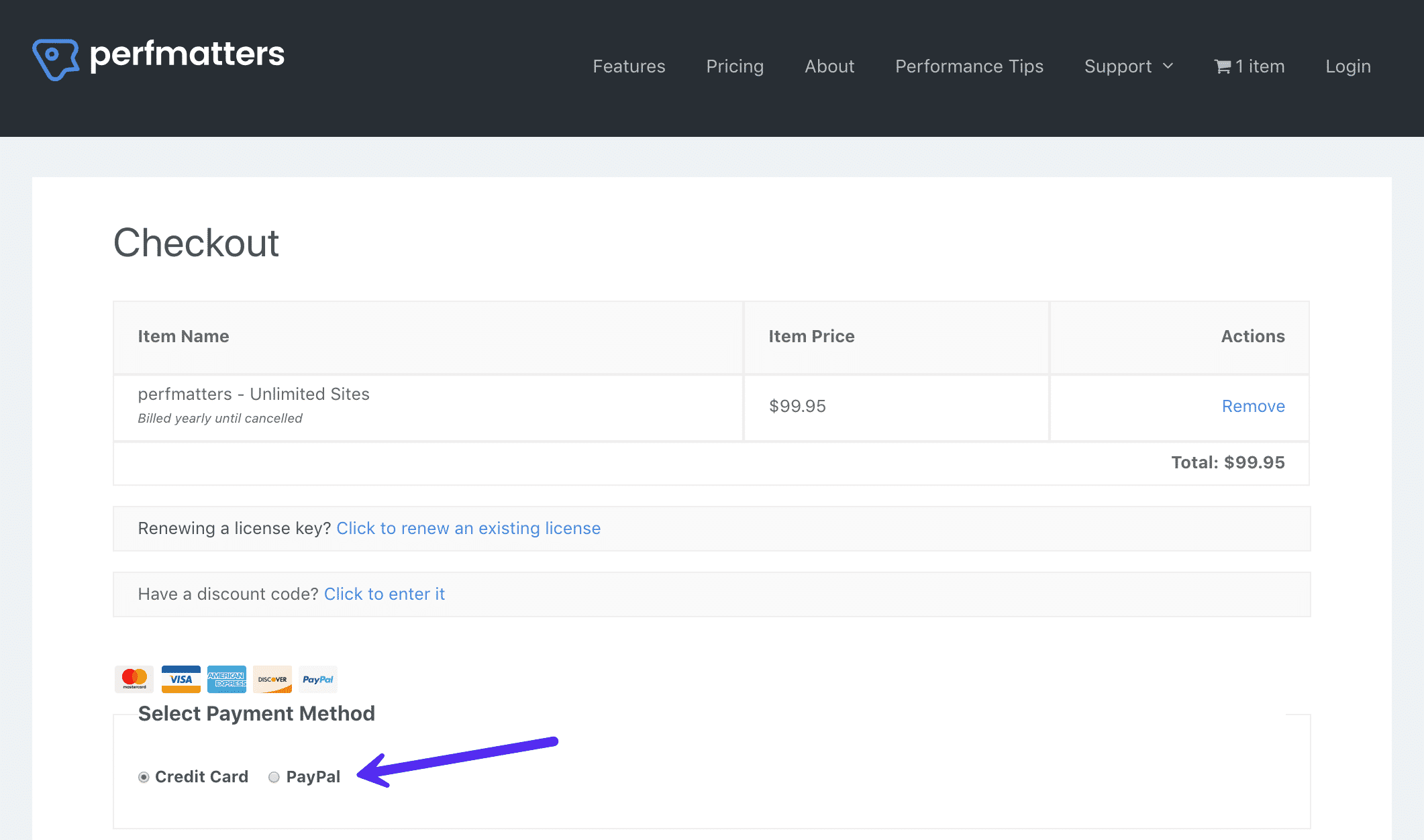
Perfmatters, a WordPress performance plugin is an example of a digitally downloadable product that accepts both payment gateways. They do this using integrations with the Easy Digital Downloads ecommerce plugin.
You can even use both payment gateways as a way to accept donations. UNICEF, a nonprofit organization does this on their website.

(Side note: Interested in accepting donations on your website like UNICEF? Check out our guides for how to set up donation buttons for Stripe and PayPal.)
Should You Use One Payment Gateway or Two?
All of the above begs the obvious question: If you can use both payment gateways, why do you have to choose at all?
Because unless you’re as big as Under Armour, UNICEF, or are tech savvy and have extra time to spare, you’re asking for extra headaches.
With two payment gateways come twice as many vendors, twice as many things to go wrong, and you’ll likely lose out on volume-based discounts from the respective gateways. If you have a custom back-end or other integrations, development around products or services you sell could turn this into a ridiculously complex task. Not good or very tenable for a small business.
However, with that being said. Sometimes having both payment gateways could be an advantage for your business. Especially in other countries. Not everyone has a credit card and a lot of consumers and bloggers use PayPal balances to pay for everything.
Running just one or two payment gateways very much depends on the industry, what you’re selling, and the type of customers you have