Having talked in length about this topic with Scott Pittman (permaculture.org), he revealed that during his extended travels with Bill Mollison through Russia and Eastern Europe and continued friendship, Bill explicitly said he considers his greatest work, not the Designers  Manual, but rather his Ferment and Human Nutrition Book. The link between traditional culture and fermentation is very intimate, stemming from a low carbon preservation tool and an alchemy of health and nutrient availability. I love the practice of fermentation, to me it’s like a good compost pile, no matter how many times you do it, it changes, never one is the same, and almost always the outcome is delightful.
The Case For Fermentation
Besides being a direct contact with nature and making your zone 0 more multifunctional, ferments have true value in permaculture systems. And no I am not talking about the yucky sauerkraut from the supermarket that we all despise nor the yogurt that is tasty because its pasteurization has been hidden by copious amounts of sugar. Rather I am referring to one of the arts that is poised to further the local foods revolution. To back this up with more than just knowing your daily eating habits will be zinged with flavor, the following are the five main reasons why we ferment:
- low carbon preservation (no use of refrigeration or high heat)
- predigestion
- unlocks minerals and vitamins
- reduces toxicity
- probiotic

Moreover, lots of common foods such as chocolate, tea, coffee are all fermented without us necessarily knowing. Of course beer, wine and cheese we recognize with our

common diets but there is such variety of ferments that it warrants exploring the topic deeper and beginning to further incorporate them into our diets. The reasons are undeniable and I present them below as to pitch the case for ferments. I am sold completely and know how my body feels with and without them because of my travel lifestyle. From funky brews of kamboucha to flavor enhancers such as Tamari, I delight in trying to incorporate these foods daily. Sandor Katz, of Wild Fermentation, and many others have been great inspirations for me and I hope to pass this wild fermenting bug onto you! And it’s a great thing to do socially, voila, meeting another basic human need thus fermentation becoming even more multifunctional!
Low Carbon Preservation:
To preserve food you have to create conditions that remove the chance of spoiling to occur. Some do it through salting foods (most preservative are synthetic salts and fertilizers), some through smoking it, some through adding sugar and heat, cooling or freezing, some through drying either with the sun energy or with grid power, or through fermentation. Fermentation offers a great option for this as its preservation comes through microbes doing their work and the attitudinal principle Everything Gardens applies to this context for sure. Microbes set up conditions for their proliferation and it is our task to aid in that process. So like Sauerkraut we cut the ingredients finely, add salt and a massaging action to draw the water out, and we simply keep everything under the water to let the fermentation occur. This anaerobic digestion is facilitated by lactobacillus and its tangy by products preserve the food all the while alchemy reigns. There is no need to refrigerate or use huge amounts of heat to preserve the cabbage in this context which is a carbon saver for sure. The salt is our main input but with this fermentation process we can make the salt go much further than just simply salting cooked food in front of us.
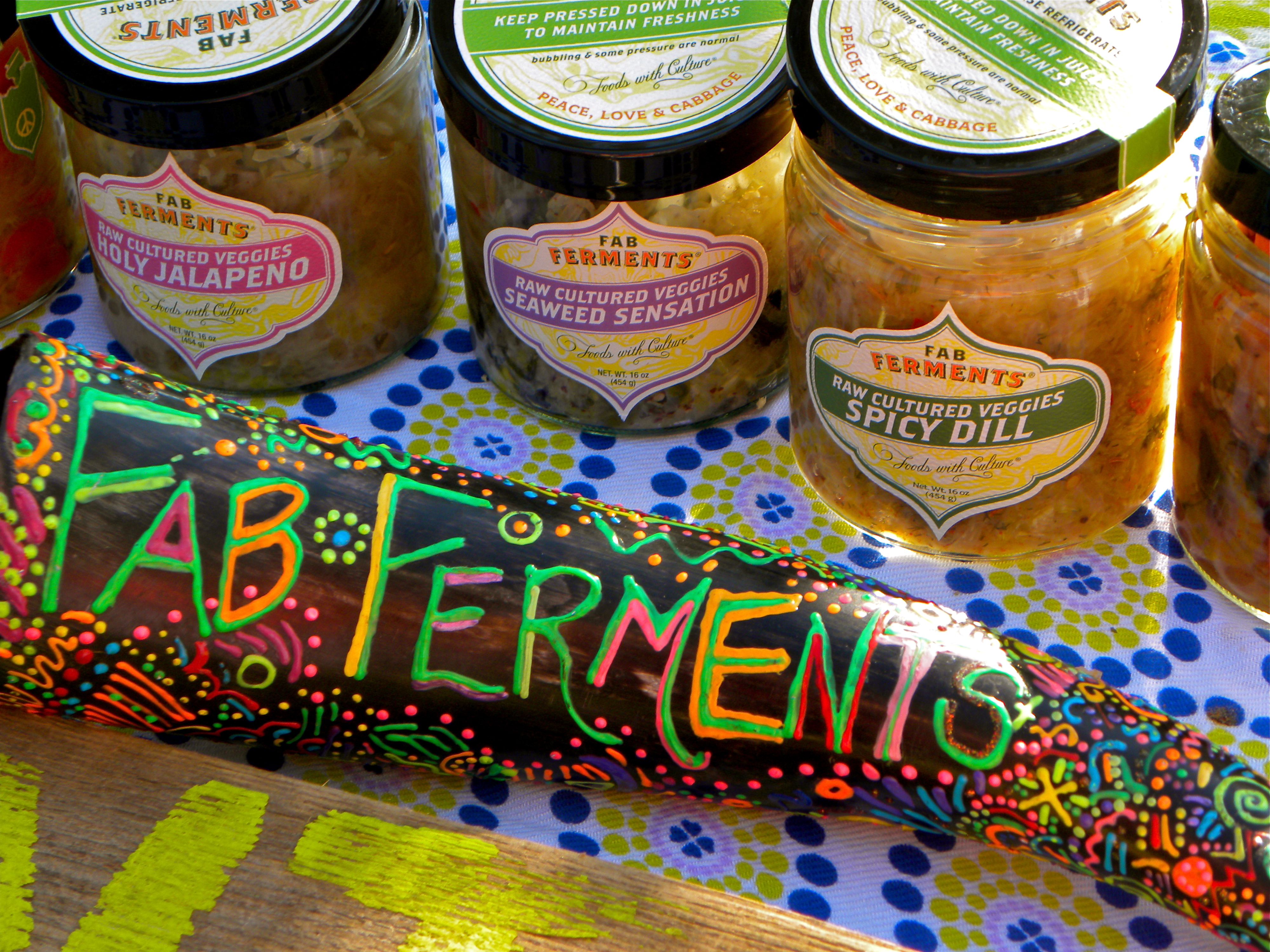
Additionally local harvests are able to be processed and stored. In cold climates eating vegetables in the winter locally can be a challenge. Thankfully fermentation done by yourself or great companies, like in my hometown Fab Ferments, which facilitates a true local winter diet. This also helps with our carbon footprint and reduces waste as the fab fermenters buy food off of local farmers that they are unable to move. I actually got into all of this through an ex-girlfriend who was a dumpster diver and after making every cabbage recipe she knew a web search unlocked a pathway of abundance. Funny how the universe works.

Pre-digestion
Analogous to a cow and its ruminant system, human ingenuity allows us to ferment foods as to be a form of pre-digestion. In fermentation, creation of the correct microbe niche sparks a process that essentially gives edge to the food all the while accelerating the evolution of the food to a new living food/ecosystem. Living foods are a big topic these days and ferments go beyond simple raw food and

its somewhat static status. These foods transcend that and bring a whole new level of nutrition and subsequent meaning to living foods. Furthermore, naturally occurring microbes in our stomachs can be given the correct habitat in say a glass jar, wooden barrel, or ceramic crock to “chew” on foods for a while before it ever goes into our digestive system. This action helps to balance foods and when it does interact with our systems the health giving properties are elevated because of this outside contact time. Then pH balances are in order and beneficial microbes thrive and give our digestive systems relief and enhancement. This food is potentialized and leads to the other factors below which furthers the case for fermentation.