

So, why is it important to learn how to do keyword research? While some bloggers drive traffic to their websites from a combination of social media, word-of-mouth and email subscribers—the most successful blogs diversify their marketing. That includes strategic keyword research with the best (free) keyword tool & thoughtful content planning that results in traffic from search engines.
If your overall traffic driving strategy includes attracting readers from search engines like Google, then the strength of your keyword research game will make or break your success as a blogger.
How to Do Keyword Research (and Get 584,958+ Blog Readers) in 2025
- What is Keyword Research? (Definition)
- Why is Keyword Research Important? (How Does it Work with SEO)
- Start with Establishing Your Seed Keywords
- Importance of Long-Tail and Medium-Tail Keywords
- High-Volume, Low Competition, High Click Rate Keywords
- How to Analyze Your Keyword Competitors
- Keyword Research by Season and Regions
- Understanding the Search Intent of Your Readers
- Which Keywords Does Your Blog Already Rank For?
- 8 Best Keyword Research Tools to Use (Free and Premium)
Disclosure: Please note that some of the links below are affiliate links and at no additional cost to you, I’ll earn a commission. Know that I only recommend products and services I’ve personally used and stand behind. When you use one of my affiliate links, the company compensates me, which helps me run this blog and keep all of my in-depth content free of charge for readers (like you).
Use My Free Keyword Research Tool

Try my free AI-Powered Keyword Tool to get dozens of research-backed ideas for keywords & topics to write about on your blog today.
I use my smart keyword research process to bring million of readers to my blog every year.
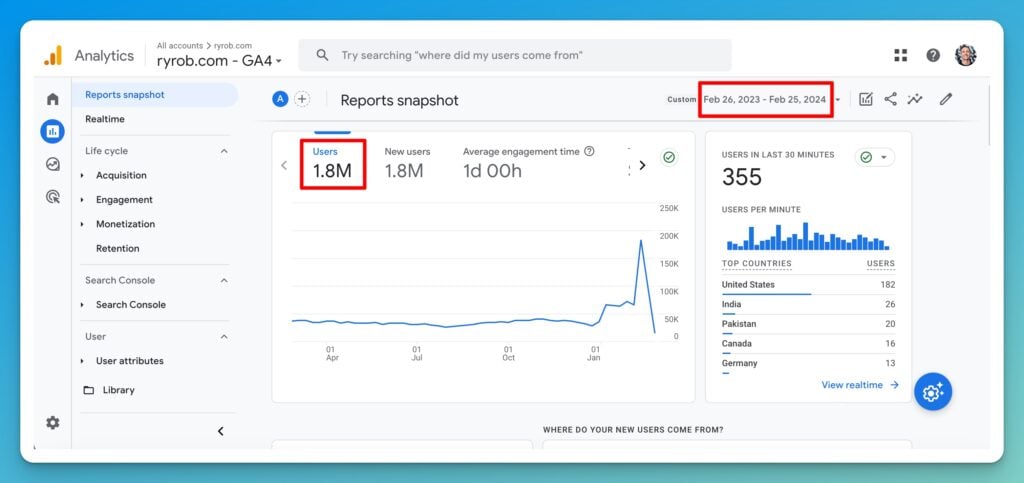
Because I’ve done thorough keyword research, I’ve chosen to write about blog topic ideas that (1) get a high volume of searches every month and (2) bring readers that have high intent & relevancy to the ways I make money blogging through affiliates and courses.
Now, let’s talk about how to do keyword research (the right way) this year. Keyword research has literally built my entire blogging business. Once you’re ready to put your keyword research into practice and build a profitable blog—head over to my ultimate guide to starting a blog.
And as a quick aside, if you’re having trouble with your content planning efforts, you can grab my free blog planner bundle and turn things up a notch today.
Use My 50+ Powerful Free Blogging Tools Today

When I first started blogging, I couldn’t afford fancy tools. That sucked. And that’s why I’ve built a stable of powerful free blogging tools ranging from keyword research to an AI article writer, blog idea generator and more. Forever free for all to use—no strings attached.
Here’s what you need to know about keyword research and how to drive more monthly readers from search engines. But first, let’s cover the basics.
1. What is Keyword Research? (Definition)
Keyword research is the process of identifying and analyzing the words and phrases people enter into search engines. It helps businesses, bloggers, and content creators understand what topics their audience is interested in, so they can optimize their content to rank higher on search results and attract more relevant visitors.
When using the right blogging tools to do your keyword research (like my very own free keyword tool, Ahrefs or Twinword Ideas), you’ll answer mission critical questions like:
- How many people are searching for this keyword phrase each month?
- What are the related keywords those people are also searching for?
- What needs to be covered (and solved) in a blog post on this keyword phrase?
- Who are the other websites competing to rank for this keyword phrase?
If you want to create valuable content for your blog (and readers) that actually helps users, then keyword research is an excellent place to start—so that you can ensure you’re writing blog posts that’ll deliver real value to people seeking those answers.
Using Keyword Research for PPC and Google Ads
Keyword research isn’t just for creating valuable blog content—it’s also a powerful tool for your paid search campaigns. By identifying high-performing keywords, you can build targeted Google Ads and PPC (pay-per-click) campaigns that drive qualified traffic to your site. With the right data, you can:
- Choose keywords that align with your audience’s intent,
- Optimize your bids and ad copy for better click-through rates, and
- Improve your return on investment by reaching prospects who are actively searching for your product or service.
Leveraging keyword insights in your PPC strategy ensures that your ads speak directly to your audience’s needs and helps you stand out.
2. Why is Keyword Research Important and How Does it Work With SEO?
If you’re not already familiar with the term SEO, it stands for search engine optimization. SEO is the set of best practices and strategies by which you can make your blog more friendly to search engines—and thus rank your content higher in Google search results. The higher you rank, the more likely searchers are to come to your website.
Here are a few blogging statistics related to SEO that further illustrate the importance of keyword research:
- Google is responsible for 91% of total organic traffic
- 75% of searchers never go past the first page of Google’s search results page
- Close to half of all clicks on the SERPs (search engine result pages) go to the top 3 listings
- 51% of all website traffic comes from organic search, 10% from paid search, and 5% for social
Keyword research is a necessary foundation for creating an SEO-friendly website.
Moreover, keyword research will not only show you know what’s trending in your industry, but also uncover what kinds of competition you’ll have for the keyword phrases you want to rank for. As an added bonus, check out my tutorial about how to set up Google Alerts and get a leg up on how your competitors are promoting their blog content.
Alright, so all of this sounds great… but how do you actually do keyword research?
How do you use keyword research to create top-ranking content for your blog? It all starts with a great keyword tool.
3. Start with Establishing Your Seed Keywords

In order to create a successful, keyword research-backed content plan for your blog you’re going to need to discover what people are actually searching for on the Internet. If you’ve already established your niche, the next step is to begin searching for seed keywords that can represent the broad purpose of your blog.
Seed keywords are baseline keywords that fit your business or niche. They’re the overarching ideas that’ll serve as your main content categories that you can later narrow down into more specific blog post ideas.
Take for example my blog right here. Today, I talk a TON about about starting, growing and monetizing a blog. Some of my seed keywords include terms like:
- Blogging
- Blog
- WordPress
- WordPress blog
- Personal blog
- Self-hosted blog
- WordPress themes
- Blog sites
- Web hosting plans
- Side hustle
- Side income
The list could go on a bit longer, but these are the main categories that all of my blog content falls under.
To narrow down your seed keywords that’ll represent the overall goal of your blog, think about your niche and the parts of it you’re most interested in.
List out five to ten keyword phrases that best capture those topics. Now those are your seed keywords. Don’t know where to begin? Try my free keyword cluster generator to help you brainstorm seed keyword ideas.
Use My Free Keyword Research Tool
Try my free AI-Powered Keyword Tool to get dozens of research-backed ideas for keywords & topics to write about on your blog today.
4. Importance of Long-Tail and Medium-Tail Keywords
When you do keyword research, you’re naturally going to be attracted to the terms that get a lot of search volume.

However, if you’re looking at only one or two-word keywords, you’re probably not going to rank #1 (anytime soon). The only caveat to this being if your blog already has an extremely high level of domain authority you can leverage to your advantage. Even still, you’ll be competing against massive sites for those keywords.
That’s exactly why your keyword research needs to go far beyond just high-search volume seed keywords.
Let’s say your blog is about woodworking. It’s not likely you’re going to rank #1 for a blog post focused only on the keyword “woodworking.” There’s way too much competition, and it’s really not specific enough.
In fact, 50% of search queries are four words or longer.
That means over half of search queries are for something more specific (long-tail) than just one, two or even three words. People are turning to the search engines like Google to answer increasingly complex questions.
These longer keyword phrases are called long-tail or medium-tail keywords.
Going back to our woodworking example, a long-tail or medium-tail keyword might focus on a specific product or technique within the woodworking sphere. You’ll undoubtedly find it easier to rank for longer-tail keyword phrases like:
- Easy bandsaw box plans
- Simple woodworking project ideas
- Top tools for hobby woodworking
Rather than trying to rank your blog content for keyword phrases like “wood” or “woodworker,” taking this approach of targeting these long-tail keywords will not only help your content rank faster—but it’ll also bring you more targeted, higher-intent readers.
A more narrow keyword phrase like the examples for woodworking above, means you’ll have a much greater chance of giving searchers the information they’re really looking for.
Of course, long-tail and medium-tail keywords don’t have as high search volume as you’ll get from a one or two-word keyword phrase. But, you’re far more likely to convert these long-tail visitors into email subscribers or paying customers—because you’re giving them exactly what they want.
That’s a big win if you hope to monetize your blog.
5. High & Medium Volume, Low Competition, High Click Rate Keywords
Generally speaking, you want to do keyword research in order to find the keyword phrases that have both:
- A high-volume search
- Low competition
Those are the goldmine keyword opportunities where you (1) have a real chance to rank high in organic search results and (2) stand to win big in terms of the amount of traffic you’ll drive.

On top of these two factors though, you also want to target keywords that have a high click-through rate.
If you’re able to find a keyword phrase that has a high search volume with a relatively small number of people writing about the topic—then you’ve found the sweet spot for a great opportunity in your niche.
Now what constitutes a high search volume is relative to what you’re writing about and how narrow your keyword phrase is.
There are single-word keywords that get literally millions of searches every single month. Obviously, that’s a very high-volume keyword—and is probably too broad to be worth much to your website anyway.
However, if you’re evaluating a long-tail keyword phrase… high volume may constitute as few as 1,000 to 10,000 searches per month.
The person searching for these phrases has a clear idea of what they’re searching for so there’s a better chance they’ll click on your site.
6. How to Analyze Your Keyword Competitors
Another crucial factor to consider when doing keyword research is your competition.

Look at the other blogs in your niche and draw insights about what makes them attractive in the eyes of their readers.
Use these ideas to improve your own approach to content and positioning your brand (or if you must, go back to the drawing board and make a new website with a better website builder or theme).
More importantly—you can use your competition to do keyword research and get a head start.
Analyze Google’s Top-Ten Research Results
The best way to learn what’s currently being favored by Google is to type in your target keyword phrase and analyze the top-ten search results. These will be your main competition for the keyword you’re trying to rank for.
This’ll also give you invaluable insights about which content format you should focus on.
For example, the top-ranking results might be blog posts, infographics, explainer videos or even product pages from businesses that are selling a product which focuses on the need at the core of this keyword phrase.
When the top-ranking posts are created by big businesses, it can be difficult to compete.
That doesn’t mean it’s impossible for your blog to rank for extremely competitive terms, but it does mean that it will take a lot of time and effort through strategic tactics like guest blogging, tweaking your blog SEO, and other blog growth initiatives over the course of months (and years) to come.
Keep this in mind as you do your keyword research and prioritize which ones to pursue.
In general, as you do more keyword research, you’ll develop a better idea of how hard it’ll seemingly be for your content to outrank the existing top search results—and always strive to uncover ways you can do a better job of answering the search-intent of a reader who lands on your post.
See How Much Competition There Is For Your Keywords
The next thing to analyze is how many people are already writing about your keywords.

If your keywords are very popular and easy to write about, there’s probably already a lot of content popping up on search engines. If that’s the case, then there are two ways to approach this scenario.
Approach #1: Look for Keyword Gaps
The first direction you can go here, is to do keyword research with the goal of identifying opportunities your competition has overlooked. These longer-tail keyword phrases will likely include:
- Information, knowledge, skills or processes that are not as commonly known
- Topics that represent information that’s new in a particular niche
At any rate, if there’s a keyword phrase that has a lot of interest and your competition isn’t writing about it yet, jump in and start ranking for that search term ASAP.
Approach #2: Commit for the Long Haul
The second option on the table, is to take those high-competition keywords and commit to working hard at doing everything you possibly can in order to outrank your competitors. Look at what the other competitive articles are offering… and offer 2x more to readers on your blog.
Google shows preference to websites that offer the absolute best value to their visitors—and that’s really what searchers are looking for.
Employ proven strategies that can boost your search rankings and make your blog more reputable. Start here:
- Guest blogging
- Perfecting your blog’s SEO
- Implementing these traffic driving strategies
- Using blogger outreach to establish partnerships and grow your audience
Ultimately the best SEO strategy is to be the blog that offers the best value on the keywords you’re covering.
Once you’ve done that, it’s time to shout about it from the rooftops (metaphorically speaking, that is).
Inspect Backlinks to See How Successful Your Competition Really Is
Another way to learn more about your competition is through the backlinks they’ve accumulated.
Backlinks are created when an external website links to your content.
Almost without exception, the more backlinks a blog post has (from high-authority websites), the more search engines like Google will see your article as being reputable and authoritative—thus being worthy of ranking higher in search results over competitors with fewer good links.
The number of backlinks a particular article has is a good way of determining how successful the content is (or soon will be), because people don’t usually link to content that’s of poor quality.
If you want to know how many backlinks a competitor article is receiving, you can paste their URL into a backlink checker. There are a lot of options for backlink checker tools, but a few I recommend are, Ahrefs, Moz, and SEMRush (all of which offer free trials you can test things out with).
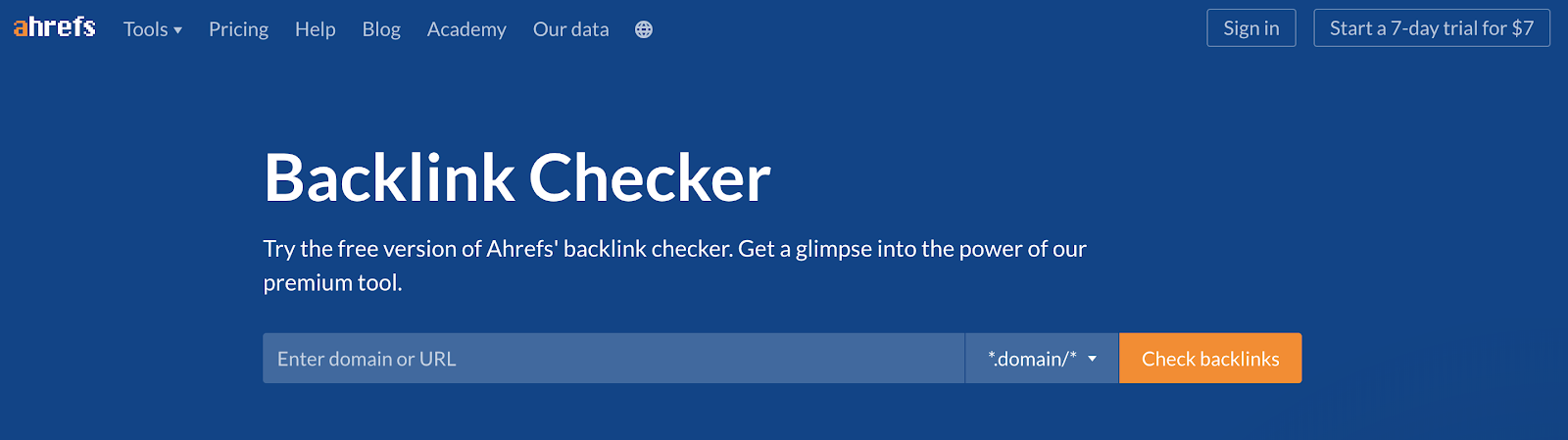
Use backlink checker tools to also identify opportunities for where you should try and